AI SEO Platform Strategy: Why Automation Alone Kills Brand Authority
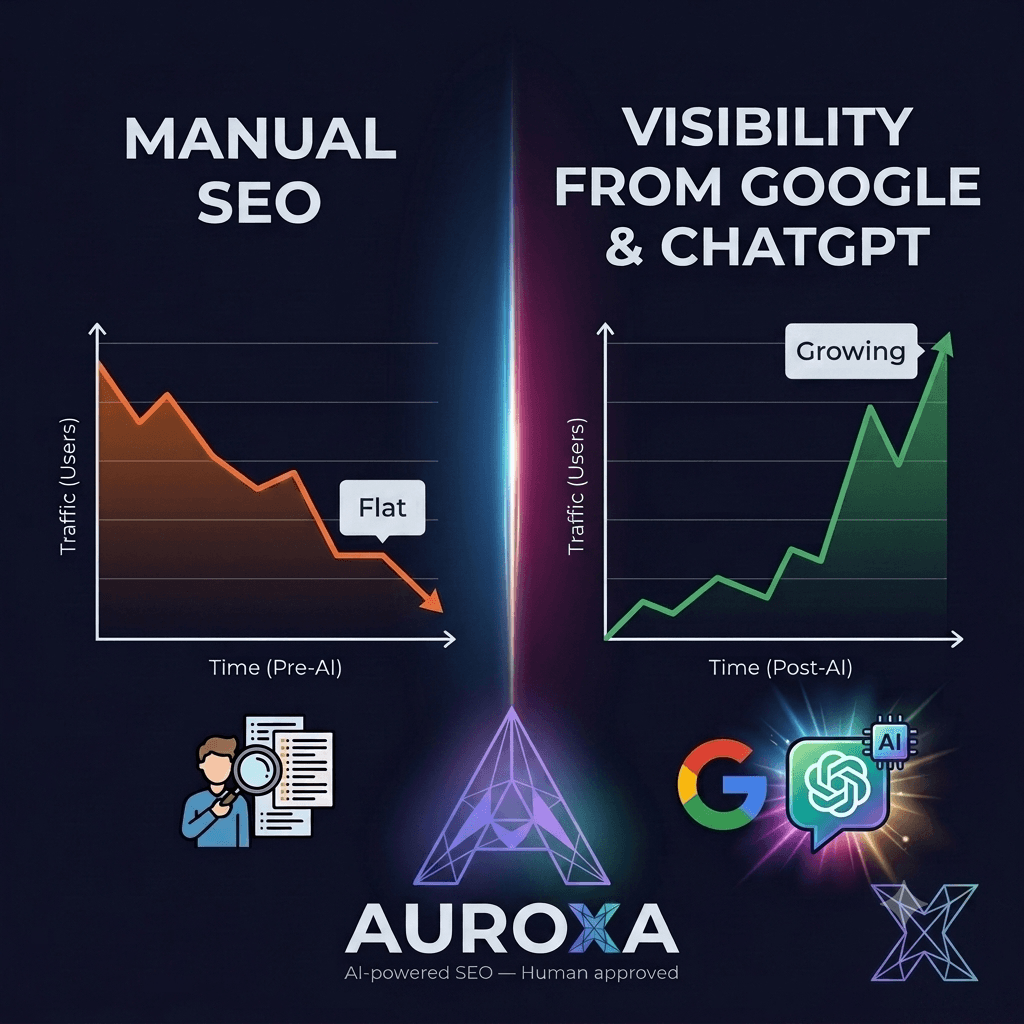
The promise sounds compelling. An AI SEO platform handles keyword research, content drafts, technical audits, and rank tracking — all without a human touching the keyboard. Businesses rush to adopt these tools, expecting a surge in organic traffic and a sharp drop in agency fees.
Here is the uncomfortable truth: deploying an AI SEO platform without a dedicated human strategist to refine its outputs and interpret nuanced data produces content that looks identical to every competitor using the same tool. The result is not growth — it is brand erasure.
What Exactly Is an AI SEO Platform and How Has It Evolved by 2026?
An AI SEO platform is a software suite. It uses machine learning to automate search tasks. These tasks include keyword analysis, content generation, technical crawling, and rank monitoring. All of this runs inside a single interface.
The category has shifted fast. Early tools in 2020 handled basic keyword clustering. By 2026, platforms run semantic gap analysis, generate structured content briefs, and flag robots.txt conflicts in real time. Google began rolling out AI Overviews in the United States in May 2024. That single event changed what "ranking" means. Appearing in a blue link is no longer enough — brands must be cited inside AI-generated answers.
Generative Engine Optimization (GEO) is the broader discipline of optimizing content to be surfaced and cited across AI-generated search experiences. Answer Engine Optimization (AEO) is the answer-focused core of GEO, structuring content so engines like Perplexity, ChatGPT, and Google's AI Overviews can extract and cite it directly. A modern AI SEO platform must support both disciplines — not just traditional rank tracking.
Why Does Human Oversight Remain Critical for AI SEO Success?
Human oversight stays critical even with AI tools. These tools learn from patterns in existing data. That means they copy what is already common. They do not create what is uniquely yours.
Google's Helpful Content system, introduced in 2022, rewards content written for people over content written primarily to rank. An AI SEO platform trained on web-scale data defaults toward generic phrasing that satisfies ranking signals on the surface while failing the deeper quality test. E-E-A-T — Experience, Expertise, Authoritativeness, and Trustworthiness — is the quality framework inside Google's Search Quality Rater Guidelines. Google added the first "E" for Experience in December 2022. No platform can inject lived experience into a draft. Only a strategist who knows the brand's proprietary case studies, real customer outcomes, and hard-won perspectives can do that.
The practical risk is measurable. When two competing brands feed the same brief into the same AI SEO platform, they receive structurally similar articles. Without a human layer to add unique data points, named frameworks, and brand-specific insight, those articles compete against each other — and both lose authority.
Which Core Features Should You Prioritize in an AI SEO Platform?
Prioritize features that surface data a human strategist can act on — not features that simply automate volume.
Look for these capabilities:
- Technical auditing that flags Core Web Vitals issues. Core Web Vitals measure loading performance, interactivity, and visual stability, and they are part of Google's page experience ranking signals.
- Crawler access management — the platform should flag whether
PerplexityBotis allowed inrobots.txt. Perplexity operates its own crawler, PerplexityBot, which a site must allow inrobots.txtto be eligible for citation in Perplexity's answers. - Schema markup support —
HowToschema identifies step-by-step instructional content and is appropriate when a page describes a process of three or more steps. A strong platform surfaces schema gaps automatically. - Indexation monitoring — HTTPS (a valid SSL certificate) is a confirmed Google ranking signal. Platforms should flag non-secure pages alongside crawl errors.
- AEO content scoring — the ability to grade drafts for direct-answer structure, not just keyword density.
Volume features — bulk article generation, automated publishing queues — are table stakes. What separates a strategic AI SEO platform from a content mill is the depth of its diagnostic layer.
How Can an AI SEO Platform Integrate with Your Existing Marketing Stack?
Integration depends on which discovery channels you are targeting, and each channel has distinct indexation requirements.
ChatGPT Search retrieves results primarily from Microsoft Bing's index. A page must be indexed in Bing to appear there. OpenAI also operates two distinct crawlers: GPTBot for model training and OAI-SearchBot for surfacing pages in ChatGPT Search results. A site that blocks OAI-SearchBot in its robots.txt will not appear in ChatGPT Search even if it ranks well in Bing.
Google's AI Overviews and AI Mode are powered by Gemini and draw from Google's own search index. For Google and Gemini discovery, Google's Indexing API or Google Search Console should be used — not IndexNow. IndexNow notifies Microsoft Bing and Yandex, not Google, so it speeds eligibility for ChatGPT Search but has no effect on Google or Gemini visibility.
A well-integrated AI SEO platform should map differences across search channels. It should also alert your team when a setting blocks visibility in a specific engine.
Measuring ROI: Is Your AI SEO Platform Truly Driving Growth?
Your platform is driving growth only if you can trace organic traffic to commercial outcomes — not just rank improvements.
Most dashboards show keyword positions and traffic volume. Those are inputs. The real signal is whether AI-cited appearances are generating leads, demo requests, or purchases. AEO differs from traditional SEO in its goal: SEO optimizes for ranking positions and clicks, while AEO optimizes for being cited as a source inside an AI-generated answer. An AI SEO platform that tracks only click-through rates misses half the value equation in 2026.
Google announced its Search Generative Experience (SGE) at Google I/O in May 2023. Since then, zero-click answers have grown as a share of search results. Brands that measure only clicks will see "declining traffic" while their citation share — and brand awareness — actually grows. Build ROI models that account for both.
Avoiding the Pitfalls: Common Mistakes When Implementing AI SEO
The most damaging mistake is treating an AI SEO platform as a replacement for strategy rather than a tool for executing it.
Three errors appear most often:
- Publishing unedited AI drafts. Generic outputs fail E-E-A-T because they carry no real experience signal. A human editor must add proprietary data, named examples, and first-person brand perspective before publishing.
- Ignoring mobile-first indexing. Google primarily uses the mobile version of a page to evaluate and rank it. Platforms that audit only desktop performance leave a critical gap.
- Blocking AI crawlers by default. Locking out
OAI-SearchBotorPerplexityBotinrobots.txtremoves the brand from AI-generated answers entirely — even when organic rankings are strong.
Each mistake is avoidable. Each requires a human to catch it. The AI SEO platform surfaces the data; the strategist decides what it means.
What Does the Future Hold for AI SEO Platforms Beyond 2026?
AI SEO platforms will shift focus soon. They will move away from content generation. The new goal is citation engineering. This means placing your own data where AI engines are most likely to extract it.
The Google map pack already shows three local business results above organic listings for many location-based queries. As AI Overviews expand, a similar "citation pack" pattern is forming at the top of AI-generated answers. Brands that invest in structured, factually anchored content now will occupy those slots.
IndexNow is an open protocol backed by Microsoft Bing. It lets a site instantly notify search engines when URLs are created, updated, or deleted. Future platforms will automate this across all supported engines. They will also route Google updates through the Indexing API. This removes manual submission entirely.
The platforms that survive will be those that combine automation speed with human-guided precision. Volume without authority is noise.
Auroxa's Approach: Blending AI Power with Strategic Human Insight
Auroxa treats an AI SEO platform as the engine — not the driver.
Our framework, which we call Precision Automation, pairs platform-generated data with human strategists who inject proprietary case studies, named frameworks, and brand-specific insights into every piece of content. The AI SEO platform handles crawl audits, schema gap detection, and indexation monitoring. The strategist decides which findings matter and how to turn them into content that no competitor can replicate.
This is not a workflow preference. It is a response to how search has changed. When AI Overviews, Perplexity, and ChatGPT Search all draw from the same web of generic content, the brand that wins citation is the one with the most specific, credible, and structurally clear answer. Generic AI output cannot achieve that. A human-guided AI SEO platform can.
The brands that treat automation as the ceiling — rather than the floor — will find themselves cited, ranked, and remembered. The ones that do not will produce content that looks like everyone else's, ranks briefly, and disappears.